
Introduction to Precious Metals
What they are, why they matter, and how they’re valued.
Gold, silver, platinum, and palladium are the foundation of the precious metals market. Whether you’re buying, selling, or simply learning, understanding how these metals are measured and valued is essential.
What Are Precious Metals?
Precious metals are rare, naturally occurring elements with high economic value. Gold and silver are the most commonly traded, while platinum and palladium are used heavily in industrial applications.
Their value comes from:
- Rarity
- Demand
- Physical properties (durability, conductivity, corrosion resistance)
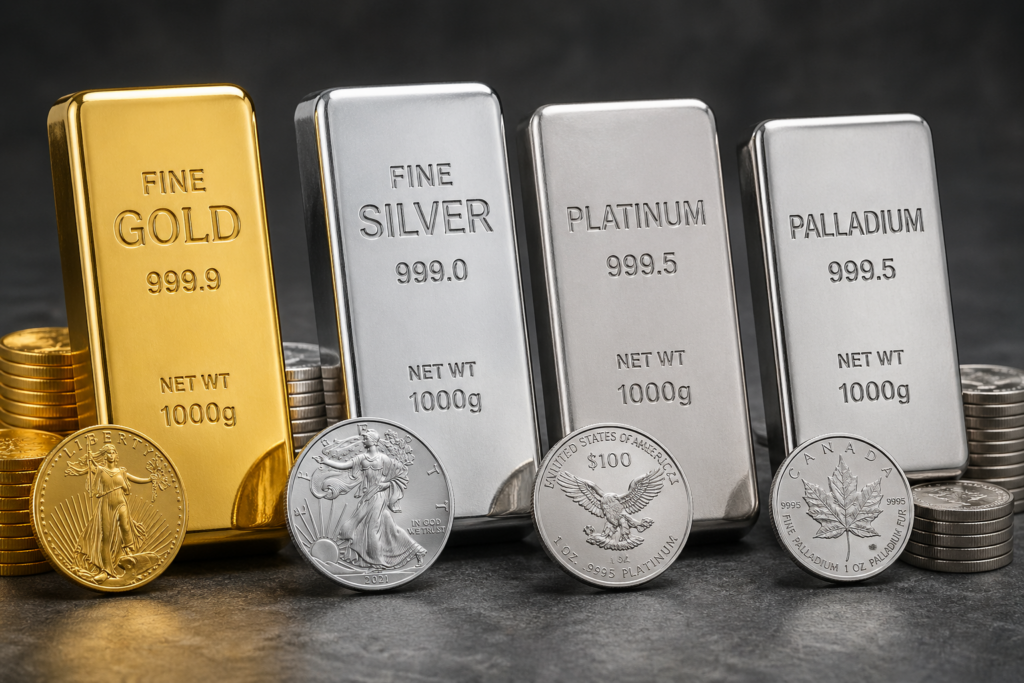
How Precious Metals Are Measured
Precious metals are measured by weight and purity.
- Weight: Typically in troy ounces (1 troy oz = 31.1035 grams or 20 pennyweight)
- Purity: Expressed as karat (gold) or fineness (silver, platinum)
Examples:
- 24k gold = pure gold
- 14k gold = 58.5% gold
- .999 silver = 99.9% pure
Spot Price
Spot price is the current market price for raw precious metal. It fluctuates throughout the day based on global supply and demand.
Everything- jewelry, coins, bullion- is ultimately tied to spot price, though final value depends on:
- Purity
- Weight
- Market demand
- Condition
Intrinsic vs Collectible Value
Not all items are valued the same way.
Intrinsic (melt) value: Based on metal content
Collectible (numismatic) value: Based on rarity, condition, and demand
A gold coin, for example, may be worth more than its metal content if it is rare or highly graded.
How This Applies to You
When you bring items in, we evaluate them based on their actual metal content and current market conditions. Some items are valued strictly for their metal, while others may carry additional collectible value.
Understanding the basics helps you know what to expect- and ensures a transparent, informed transaction.